.png)
Marathi Series 'Baai Tujhyapaayi': A Bold Exploration of Tradition and Female Empowerment

A Glimpse into 'Baai Tujhyapaayi'
Set in a fictional village in Maharashtra during 1992, the series 'Baai Tujhyapaayi' presents a society where outdated beliefs prevail. The villagers, while worshipping the goddess Vesai, engage in practices that contradict their faith.
Young girls reaching puberty are swiftly taken out of school to marry, often to significantly older men. Those who resist face public shaming, and their families are marginalized.
Vesai is seen as the fierce guardian of the village's honor and prosperity. However, the series raises a critical question: why does this goddess, whose temple is reserved for virgin girls, challenge her young followers? This dilemma is central to the lives of Ahilya, her mother Lakshmi, and her father Aaba (Siddhesh Dhuri).
Ahilya (Sajiri Joshi), the top student at her school, aspires to become a doctor. However, her engagement to the ambitious yet uneducated politician Jaysing (Shivraj Waichal) forces her to conform to traditional expectations, including announcing her first menstrual cycle.
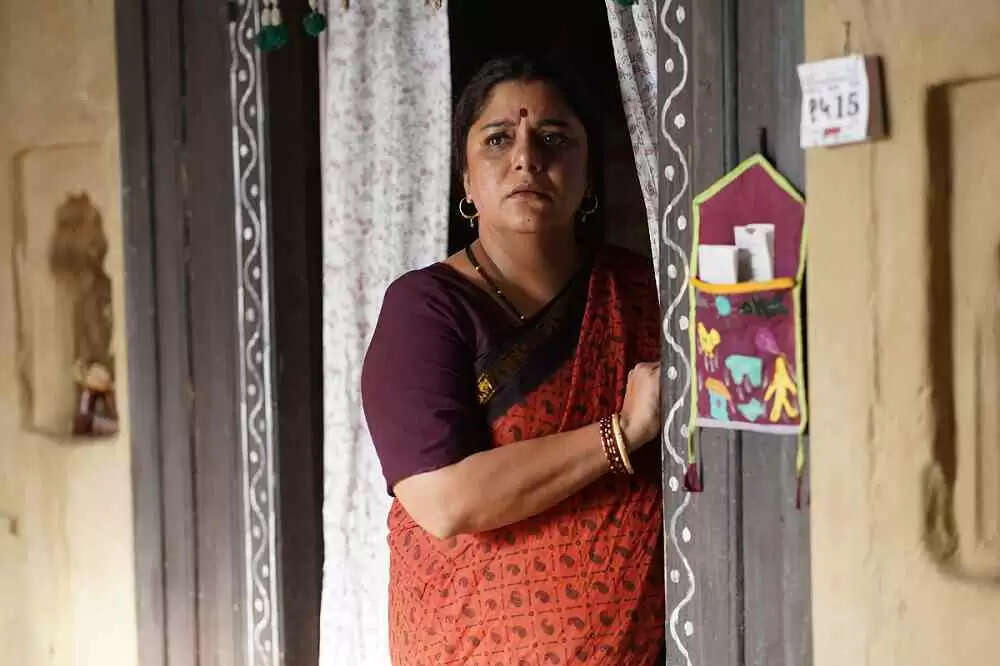
Refusing to comply, Ahilya cleverly deceives her mother Lakshmi (Kshitee Jog) for a time. This deception allows for a deeper exploration of their mother-daughter relationship, a highlight of the ZEE5 series.
The Marathi show is adapted from Muthukumar’s acclaimed Tamil series 'Ayali', also available on ZEE5. While 'Baai Tujhyapaayi' follows the reformist path laid out by 'Ayali', director Nipun Dharmadhikari and writers Nikhil Khaire and Mukta Bam effectively localize the narrative. A talented cast delivers well-crafted scenes that highlight the contrast between blind faith and rational thinking.
The series reveals that adolescent marriage is just one extreme manifestation of the broader restrictions imposed on women regarding their behavior, thoughts, and prayers. The presence of menstrual police monitoring the girls is indicative of a larger culture of discrimination. While the goddess offers some refuge, she also binds women, with men holding the chains.
In its early episodes, 'Baai Tujhyapaayi' conveys its messages lightly while intertwining the importance of girls' education with depictions of village life. However, later episodes veer into the fantastical, diminishing the show's realism.
The series bravely examines how religious beliefs are manipulated for personal agendas. Yet, the most impactful moments arise from the exploration of interpersonal relationships and how superstition suppresses women.
One of the more despicable characters, Jaisingh’s sycophant Gopal (Anil More), exhibits an inappropriate obsession with menstrual cycles. His remarks contrast sharply with the supportive guidance of progressive teacher Mangala (Vibhawari Deshpande), who encourages Ahilya's academic ambitions.
Ahilya's true struggle lies within her home. The series portrays poignant interactions between her and her parents—Lakshmi, who fears the repercussions of Ahilya's defiance, and Aaba, who deeply cares for his talented daughter. Ahilya's journey also prompts Lakshmi to reflect on her own sacrifices.
Sajiri Joshi, who made a notable debut in Rohan Mapuskar’s film 'April May 99', delivers a compelling performance as Ahilya. Although her character often displays wisdom beyond her years, Joshi infuses her portrayal with genuine emotion.
Kshitee Jog excels as a matriarch who embodies tough love, while Siddhesh Dhuri effectively portrays a 'modern farmer' grappling with change within his family.
'Baai Tujhyapaayi' features powerful scenes and a convincing setting that help it overcome the disappointment of its conclusion. Some of the most memorable moments include Ahilya's bravery, Lakshmi's empathetic fears, and the unsettling presence of Gopal. Rama Nadgauda plays a temple priestess who embodies the goddess Vesai with both grace and cunning.